
Breathing Slowly
(Perhaps unpopular) Opinions on the necessity of letting each season have its due

November 12th is too early to put up a Christmas tree. I don’t care who you are or how you argue the point. It’s too early. November is the month which the Church dedicates to the remembrance of the Holy Souls, but our secular culture has so permeated the entire fabric of our lives that it is nearly impossible to keep this at the front of our minds.
A few weeks ago, my supervisor asked to meet me in one of our campus event spaces. When he arrived, he informed me of two orders that he had received: to see that Christmas trees were added to that event space, and to have the large, 20’ Christmas tree put up in the main entrance of the Student Union Building. Both tasks were to be completed as soon as possible before students departed for Thanksgiving. What reason was given for decorating so early? Why, so the students might be able to enjoy the lovely decorations around campus before leaving at the end of the semester! The unspoken portion of that, you may surmise, is that all these decorations are to be removed before the students return from their Christmas break in January.
As I’ve stated in previous posts, I work for a Catholic university. I detest these orders. I deplore the fact that we choose to bend the knee to secular culture. I am appalled that we began putting up Christmas decorations when November had barely begun. We venerate St. John Paul II as one of our patrons, and yet it seems to me, we are failing to live up to his call to be counter-cultural. What better way is there to be counter-cultural than to live a liturgical life? What better way to celebrate the turning of the seasons than to let Holy Mother Church be our guide? Advent has not even arrived yet, and already the campus looks like it’s celebrating Christmas.
I know I sound terribly Scrooge-y right now. I have heard so many protests at my seeming lack of Christmas spirit once the calendar turns over into November. Let me take a moment to dispel this perception: Christmas is my favorite Holy Day. I love the liturgy, the hymns, the decorations in the churches, and the joy of welcoming the Christ Child. Easter is the greater feast, but there is something about Christmas that speaks to my soul in a way that I have to yet to experience at Easter. I have wept at Midnight Mass, at the thought of Our Lady asking me if I want to hold the infant Jesus in my arms. At the same time, I think of the Blessed Mother’s experience in that moment, and of the memories I’m sure she experienced years later when she held her Son in her arms after His passion. The great mystery of the Nativity and the Passion and Resurrection are inextricably linked together, and one means nothing without the other. Our Lady offers each one of us the opportunity to hold the infant Jesus in our arms if we wish, so that we may gaze upon the face of Love Incarnate. These beautiful moments of prayer and contemplation make Christmas special for me.
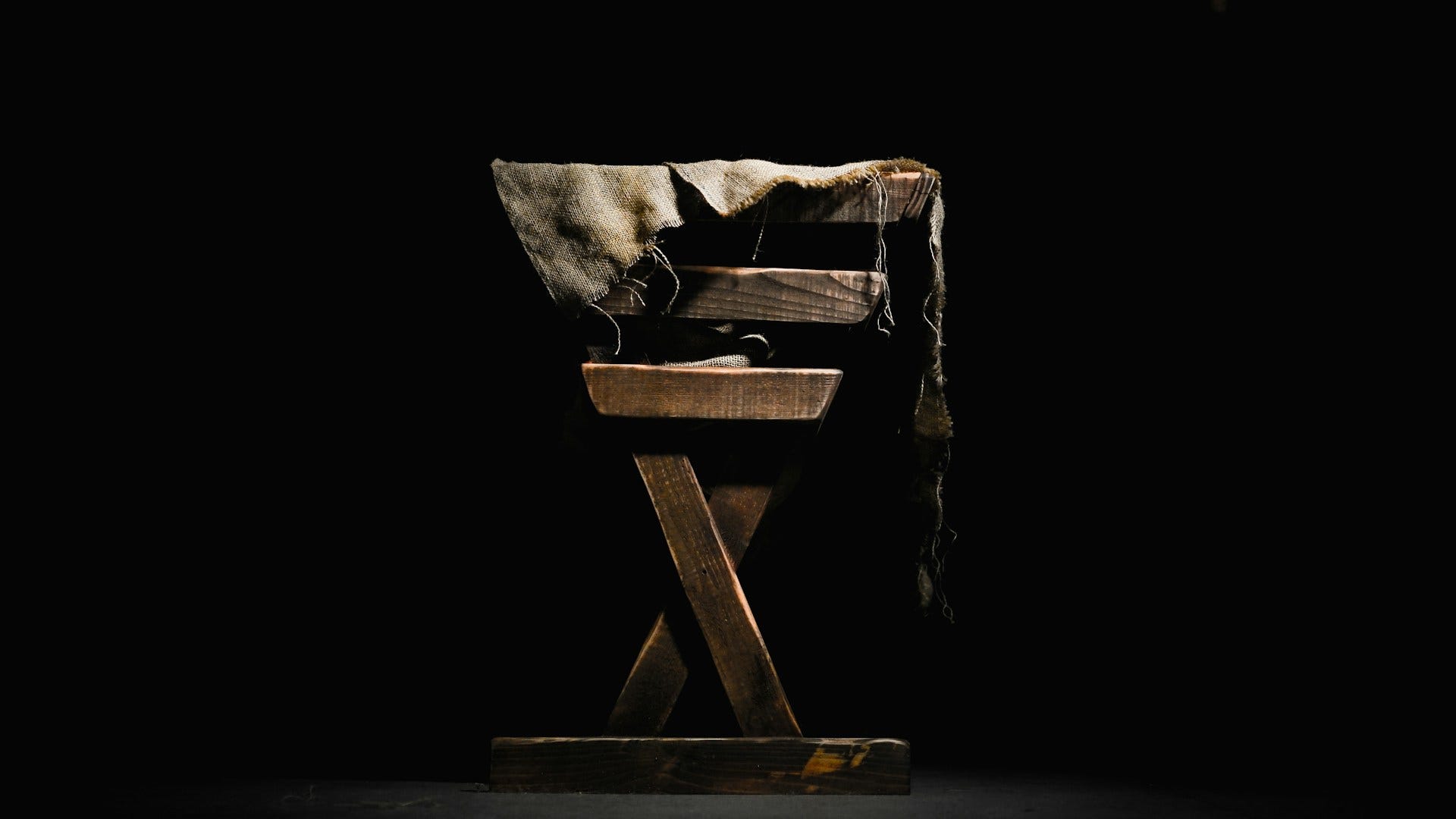
But in this human life, I know I can’t experience these moments all the time. If I did, I might begin to take them for granted. Too much of a good thing makes it seem less appetizing after a while. That’s why we have seasons within the Church’s liturgical life, as well as within our own lives (St. Thérèse and St. Teresa of Calcutta spring to mind immediately for me, having well-known periods of their lives marked by great spiritual darkness). That’s why we have opportunities to prepare our souls for the different celebrations, as well as seasons to let the seeds planted in those preparatory and celebratory moments take root and grow. The ebb and flow has a point. We need the penitential seasons of Advent and Lent so that we can clear out the clutter and take out the garbage that collects in our lives so that there is room to welcome Christ. We’re supposed to make room for the joyful celebrations to come so that we may receive the gifts of the Incarnation and the Resurrection at their respective times, and then to reflect on those gifts in the seasons after those Feasts.
In a previous iteration of this piece, I said Advent is kind of like when our parents remind us to eat our vegetables at dinner. Most children think vegetables don’t taste very good, especially when things like ice cream exist! But Mom and Dad gently insist that we need our vegetables because they’ll help us grow big and strong. My parents chose to use the incentive of a sweet treat to convince my brothers and me to eat our vegetables, and in a similar way, Christmas arrives with its glad tidings to make the penitential season mean something. Here’s the key difference I noted in the original analogy: by the time Christmas arrives, the secular world has been binging for the better part of two months (or more) on the “sweet treat” of Christmas vibes, if you will, and now they’re sick of it. That’s why it all goes away on December 26th or 27th. But for you and me, we’ve only just begun to celebrate, and we have a full 40 days of Christmas and Epiphanytide waiting for us!
Some other writers here on Substack have noted that we can look forward to Christmas without falling for the trap of thinking it’s Christmastide already. In a world that is out of breath from rushing everywhere all the time, it’s good to slow down. When we rush, we lose sight of what matters and of what the Lord tells us is important. We begin to focus solely on ourselves. We should be asking, “What is God trying to tell us in this season?” We can only listen when we stop and rest.
Growing up, my family began the process of decorating for Christmas by putting up an Advent calendar in the kitchen and placing an Advent wreath on the table. My mom would put a wreath on the front door, and our Nativity scene silhouette would go in the front yard with a floodlight to illuminate it around the second or third week. We would also spend time each day adding to the Jesse Tree in the dining room. If you’re unfamiliar with the Jesse Tree, it’s a Bible study designed to trace Jesus’ lineage and the story of salvation history through Scripture. It also includes decorating a tree with ornaments depicting various key images of those stories, from creation to Jonah and David to the Maccabees. The fir tree in the living room (always a real tree for us) always came last, around December 21st or 22nd, and often didn’t get decorated until Christmas Eve. I have fond memories of my childhood celebrations, and as a young adult I became quite convinced that this is the right way for me to prepare. It may not be right for everyone, I admit, but I think we would all benefit from slowing down a little bit and allowing ourselves to enter more fully into the season of Advent.
The metaphysical significance to all of this methodical preparation is largely forgotten. How are we to make room in our hearts for the infant Christ when we are so busy focusing on the physical, external preparations? We’re getting ready to celebrate the arrival of a baby. We wouldn’t want to bring this new child into a dirty, messy home. Why, then, do we think it’s okay to welcome Jesus into an unclean heart?
Holy Mother Church gives us penitential seasons for the purpose of both shrugging off a particular vice and practicing virtue. We often hear, as Lent approaches, the importance of filling the space we make by giving up a particular thing we enjoy with the practice of a virtue or some other good thing (works of mercy, for instance), lest that vacuum be filled by something else not so good. Advent, while not as rigorous as Lent, is nonetheless also a season of penance, and we should treat it as such. It's a chance to reset and renew our focus on Christ, to wait with patient joy for Him.
She is also wise enough to know that we need time to shift from the green seasons (Ordinary Time, or the Sundays after Epiphany and Pentecost) to the purple seasons of Advent and Lent. Septuagesima Sunday and the subsequent two Sundays preceding Ash Wednesday exist for this purpose. Similarly, November’s focus on the Holy Souls is a chance to take a step back from everything and offer prayers for our deceased friends and relatives, and maybe to offer some penances for them, too. Think of it like this: if a mother has to run to catch her child, chances are she might find herself a little out of breath from the ordeal, and she’s going to need a few minutes to bring her heartbeat and respiratory rate back down to normal. We need the same thing in the grand scheme of the liturgical year, just like we need a moment when we first enter into prayer to recollect ourselves and shift our gaze to His Holy Face.
November’s focus on the Holy Souls is a beautiful way to recognize the end of the liturgical year, to lay it to rest, and to allow us to shift our mindset to one of hope-filled penance. Before Advent arrives, there are opportunities for Catholics everywhere to make small sacrifices for our beloved dead so that they may sooner attain full union with God in Heaven. Such opportunities prepare the way for us to enter into Advent with prayerful, contrite, and, most importantly, hopeful hearts. There is joy in this season! We are preparing for the birth of the King. We know He is coming, so let us make room for Him in our hearts. The more we practice making room for Him now, the easier it will be to maintain that room for Him so that it is ready at the time of His Second Coming.
I have more that I want to say, but it would be better for me to save those thoughts for future writing. To breathe slowly, as it were, and allow each part its proper time, is good. I invite you to ponder with me what it will mean in your life, or your family’s life, to breathe slowly in this Advent season and rest in the anticipation of the Nativity of Our Lord Jesus Christ. May God bless us with a happy Advent!
Yes, John Paul, I do agree with you to a point. The thing I've found interesting on either extreme is whether or not those expressing their views are pursuing truth, goodness, and beauty––what truly is right? I was raised in a family where Christmas decorations come out the weekend after Thanksgiving, sometimes a little later, but never before. I appreciated this, because Thanksgiving is its own thing, and it's my second favorite holiday after Christmas. I would say Easter is my second favorite, but the fall-winter season cycle has always been my favorite. I guess Easter is my second favorite, after Christmas, for religious reasons, but I've always loved the warmth of Thanksgiving and Christmas.
I appreciate your writing, and agree with you. Thank you for sharing!